DES DONNÉES ACOUSTIQUES À L'OPTIMISATION DU BRUIT DES DRONES
Le bruit des drones résulte d'une interaction complexe entre le système de propulsion, la structure et les conditions de fonctionnement. Pour l'optimiser dès les phases de développement, il est indispensable de comprendre à la fois ses mécanismes physiques et sa perception par l'être humain.
Grâce à des méthodes de mesure de pointe, à des analyses NVH et de dynamique des structures ainsi qu'à des évaluations psychoacoustiques, HEAD acoustics vous aide à identifier les sources de bruit et à prendre des décisions de conception éclairées.

En raison de leur conception légère, de leurs vitesses de rotation élevées et des interactions complexes entre la poussée, le châssis et la charge utile, les drones sont soumis à d'importantes sollicitations dynamiques. Ces vibrations influencent non seulement les émissions acoustiques, mais aussi la stabilité en vol, la durée de vie et la fiabilité globale du système. Elles affectent également la transmission des forces au sein du système pendant son fonctionnement.
Comprendre la manière dont les forces dynamiques se propagent à travers les composants et les structures est donc essentiel pour développer des drones de façon ciblée et garantir des performances fiables.
HEAD acoustics propose des solutions de pointe pour la mesure et l'analyse des vibrations, des forces dynamiques et des voies de transfert entre les composants et les sous-ensembles. L'analyse des déformées opérationnelles (ODS) et l'analyse modale expérimentale (EMA), associées à des workflows basés sur l'IA, permettent d'identifier les principales sources de vibrations, d'analyser le comportement structurel et de comprendre comment les vibrations se propagent dans l'ensemble du système.
Cette approche fournit des résultats fiables et reproductibles, facilite les améliorations ciblées de la conception, réduit les risques liés au développement et favorise une prise de décision plus rapide et plus sûre.

Le bruit des drones résulte de l'interaction entre le bruit des rotors, les vibrations structurelles, les effets aérodynamiques et les conditions d'exploitation. Comme ces signatures acoustiques sont très dynamiques, une évaluation fiable nécessite des conditions de mesure réalistes ainsi qu'une acquisition synchronisée des données acoustiques, vibratoires et opérationnelles.
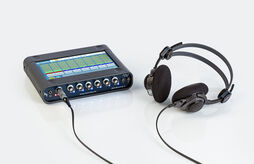
HEAD acoustics accompagne la réalisation d'essais NVH et acoustiques complets, depuis les composants individuels jusqu'au fonctionnement du système dans son ensemble. Les contributions du bruit aérien et du bruit solidien peuvent être analysées conjointement avec des données de mesure multicanaux afin d'identifier les sources critiques et les conditions d'exploitation les plus influentes.
Les résultats constituent une base de données fiable pour les décisions de conception, la validation, l'optimisation et les évaluations psychoacoustiques approfondies.

Le bruit des drones ne peut pas être caractérisé uniquement par les niveaux de pression acoustique. En raison de leurs caractéristiques sonores spécifiques, les drones sont souvent perçus comme plus gênants que d'autres sources de bruit présentant un niveau sonore équivalent.
La psychoacoustique établit un lien entre le signal acoustique physique et la perception humaine, permettant ainsi une évaluation plus réaliste du bruit des drones. Elle aide à comprendre comment certaines propriétés acoustiques influencent la gêne perçue, l'acceptation et la qualité sonore globale dans des conditions d'exploitation réelles.
HEAD acoustics analyse des paramètres psychoacoustiques tels que la sonie, la tonalité, la rugosité et les fluctuations d'amplitude afin d'identifier les principaux facteurs responsables de la gêne perçue. En combinant l'analyse objective, des modèles auditifs avancés et des évaluations subjectives basées sur l'écoute, notamment via des tests de jury, le bruit des drones peut être évalué et optimisé en fonction de sa perception réelle.
Cette approche permet de prédire plus précisément l'impact acoustique dans des environnements réels et contribue au développement de drones plus silencieux et moins gênants.

Les drones peuvent être détectés et localisés grâce aux sons qu'ils émettent en fonctionnement. La localisation acoustique permet de déterminer leur position et leurs déplacements, même lorsque l'observation visuelle est limitée, difficile ou impossible.
Cette technologie permet d'analyser le comportement des drones ainsi que leur impact acoustique dans des conditions d'exploitation réalistes et selon différents scénarios de vol.
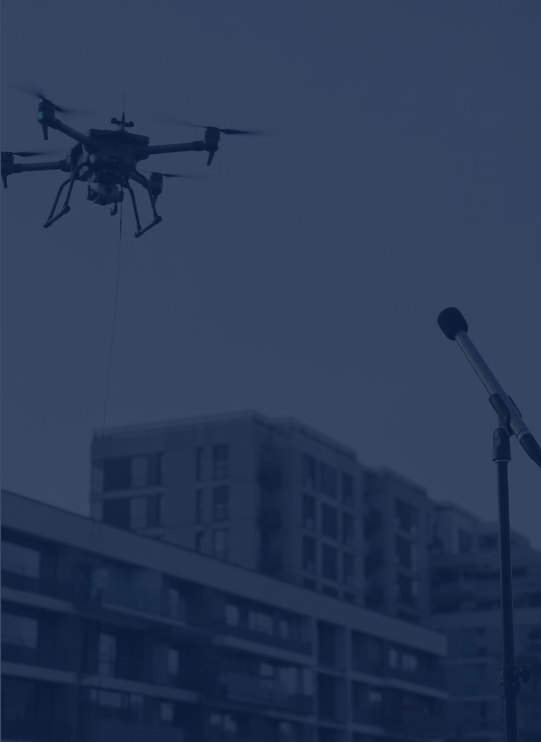
Grâce à des réseaux de microphones haute performance tels que le VMA V, associés à un logiciel d'analyse avancé et à un traitement en temps réel, HEAD acoustics permet la localisation instantanée des drones ainsi que l'évaluation de leurs trajectoires et de leur comportement acoustique.
En corrélant les données de position et de mouvement avec les mesures acoustiques, il devient possible d'analyser l'influence de la trajectoire de vol, de la distance et des conditions d'exploitation sur l'impact acoustique des drones. Cette approche facilite l'étude de scénarios réalistes, les applications de surveillance ainsi que l'évaluation du bruit des drones en fonction de leur position.
SOLUTIONS COMPLÈTES POUR L'ACOUSTIQUE DES DRONES
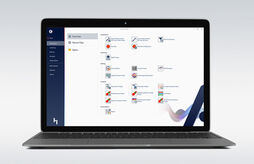
HEAD acoustics propose à la fois des systèmes de mesure performants et des services d'ingénierie spécialisés pour les projets acoustiques liés aux drones. Qu'il s'agisse de solutions matérielles, logicielles ou de campagnes de mesure complètes, nous accompagnons l'ensemble du processus, de l'acquisition des données et de la localisation des sources sonores jusqu'à l'analyse et l'optimisation du bruit des drones.


Produits pertinents